

Introduction
Today, Artificial Intelligence (AI) has become a useful tool for many of us. We use it to improve our emails, generate ideas for projects, and create images. These tools can be very useful. It’s easy to take for granted the potential dangers when using these tools on a daily basis.
Where does AI get information when you ask a question? Could it be used against you? Does it provide you with accurate information? This guide will show you how to use AI safely while protecting your personal privacy, professional reputation, and digital security.
1. Why AI Safety Matters
Why Artificial Intelligence Safety Is Becoming More Important.
Many people would not leave their front door open to strangers, yet they may unknowingly do something similar when using AI platforms. When using AI models, some interactions may be stored or used to improve the service, depending on the provider and your settings. That’s why it’s important to understand what data you are sharing.
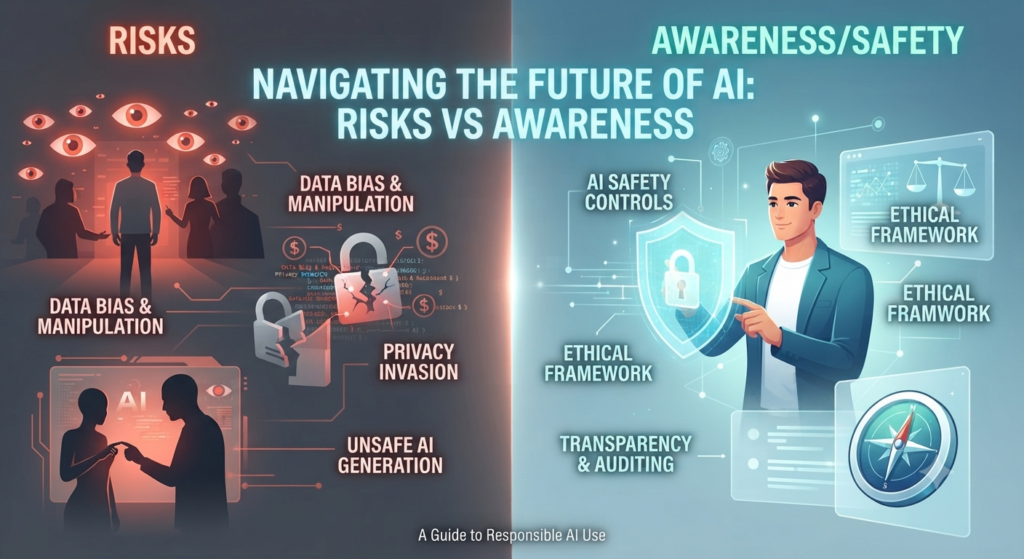
The risks of using Artificial Intelligence may not always be obvious. You could easily be sharing private business information, personal information, or confidential documents without taking precautions. Learning about Artificial Intelligence safely is not about not being hacked; it’s about having the control of your digital footprint in an age where information is highly valued.
2. Common Privacy Risks
One risk of using Artificial Intelligence is that your data may be stored or processed by the service. Many AI services are available for public use, but they do not all handle conversations and user data in the same way. Depending on the service’s policies and settings, your input may be stored, reviewed, or used to improve the service.

- Training Data Exposure: The chat data can be used for training different versions of the model. If sensitive information is shared with an AI service, it could potentially be stored or processed according to that service’s policies.
- Shadow IT: When employees use external AI tools for confidential work without their organization’s approval or oversight, this can be considered Shadow IT.
- Account Compromise: If an Artificial Intelligence account is connected to your email or social media accounts, then a breach of that Artificial Intelligence platform could be the key to someone getting into your digital life.
3. What You Should Never Share with AI
Some information should never be entered into a public AI tool. Keep the following types of sensitive information private:
Imagine an Artificial Intelligence chatbot as a bulletin board in a bustling city. Would you post your bank account number? No. Keep this list in mind to use Artificial Intelligence safely:
- Personal Identifiable Information: Do not enter your social security number, residence address or complete medical history.
- Financial Information: Do not share credit card numbers, bank statements or investment records.
- Proprietary Work Data: Proprietary Work Data: Do not upload confidential business information, trade secrets, or material covered by a non-disclosure agreement (NDA) to a public AI platform unless you are authorized to do so.
- Passwords and Keys: Never enter passwords, API keys, authentication codes, or other login credentials into an AI chat. Use a trusted password manager to create and store strong passwords.
4. AI Hallucinations and Fact Checking
AI can be a powerful tool, but it is not an infallible source of truth. It may produce confident-sounding answers even when the information is incorrect.

AI hallucinations occur when an AI system generates information that sounds convincing but is inaccurate, misleading, or completely made up. To use AI safely, never assume that its output is automatically correct. Double-check important information, especially statistics, legal or medical claims, quotations, and historical facts, using reputable sources.
5. Copyright and Plagiarism Concerns
Who is the owner of things that Artificial Intelligence generates? Copyright law surrounding AI-generated content is still evolving, so ownership and protection can be uncertain depending on the country and circumstances.
Copyright protection for AI-generated content can be complicated because copyright laws generally focus on human authorship, and the rules vary by jurisdiction. In addition, models can be trained on content from the internet, which implies a risk of plagiarism. Use AI as a brainstorming tool or companion rather than a finished product. Always review, rewrite, and edit AI-generated content, and add your own ideas and interpretation to make the work your own.
6. Using Artificial Intelligence ethically
AI ethics is not just about security; it is also about how you use these tools and how your choices affect other people and the digital world.

- Bias: AI models can reflect biases present in their training data, which may influence their outputs. Be especially cautious when using AI for hiring, decision-making, policy, or other sensitive topics.
- Transparency: If you use Artificial Intelligence to produce content for your job or a client, it’s best to disclose it. Honesty fosters trust.
- Energy Consumption: Training and operating large AI models can require significant computing resources and energy. Use these tools thoughtfully and avoid unnecessary usage.
7. Secure Prompt-Writing Practices
You can also improve AI safety by being careful about the information you include in your prompts.
- Use placeholders instead of real names: Use placeholders instead of real names: Rather than entering a real person’s name, company, or confidential details, use generic terms such as ‘a colleague’ or ‘a client company.’
- Make sure to check opt-out settings: Check the privacy and data-control settings of the AI service you use. Some platforms provide options to limit or opt out of using your conversations to improve their models, but these controls vary by provider and plan.

8. Best Practices Checklist
Keep this checklist handy when using AI tools:
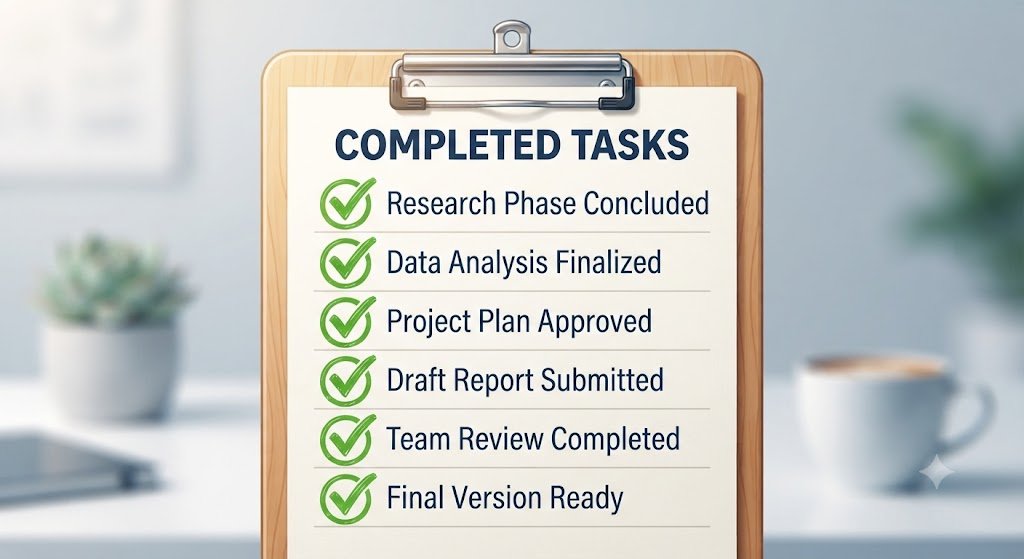
- Clear History: Clear History: Delete chat logs when appropriate, especially if they contain information you no longer need to keep.
- Check Settings: Check Settings: Review your privacy and data-control settings and disable model-improvement or training options when appropriate.
- Verify Everything: Check facts against human sources.
- Do not Share Credentials: Ensure passwords are not shared in the chat.
- Human-in-the-loop: Human-in-the-Loop: Always review and edit AI-generated content before publishing or using it for important decisions.
- Utilize Official Apps: Use Official Apps: Whenever possible, use official apps and trusted services. Be cautious with unknown ‘wrapper’ apps that may collect unnecessary information or contain security risks.
FAQs
1. Is it safe to share personal information with AI chatbots?
Answer: Not recommended. Avoid sharing sensitive personal information with public AI chatbots. How your conversations are stored or used depends on the specific service and its privacy and data-control settings. Check the platform’s current privacy policy and data controls before sharing information.
2. What are “AI hallucinations”?
Answer: AI hallucinations occur when a model confidently generates information that is inaccurate or invented. Because AI can produce convincing answers without actually understanding whether every claim is true, always verify important information against credible sources.
3. Can I use AI-generated content for my own projects?
Answer: You can often use AI-generated material for drafting and brainstorming, but ownership and copyright protection depend on the law in your country, the amount of human contribution, and the platform’s terms. Always review and edit AI-generated content before using it in your own work.
4. How can I stop AI from using my data for training?
Answer: Check the AI platform’s privacy or data-control settings. Some services provide options to control whether conversations are used to improve their models. Settings and policies vary by provider, so review the current official documentation for the service you use.
5. Why does AI have biases?
Answer: AI models are trained on large datasets that can contain historical, cultural, and societal biases. As a result, their outputs may sometimes reflect or reinforce those biases.
6. Is a paid AI subscription safer than a free version?
Answer: Not necessarily. A paid plan does not automatically mean that your data is safer. Privacy and data-use policies vary by provider and plan. Before using an AI service for sensitive information, review its current privacy terms, data controls, and retention policies.
7. What is “Shadow AI” at work?
Answer: Shadow AI refers to employees using unsanctioned, third-party AI tools for work tasks without IT department approval. This can create significant security and privacy risks, especially when employees enter confidential company information into external AI services without approval.
8. How do I know if an AI is being used in a tool I’m using?
Answer: Look for disclaimers in the tool’s “Terms of Service” or privacy policy. Many modern software suites now integrate AI features; if you aren’t sure, check the settings menu or the product’s official help page to see if your data is being processed by AI.
9. Can AI be used for malicious purposes?
Answer: Yes. Malicious actors can use AI to create realistic deepfakes, imitate voices, or generate convincing phishing messages. Treat unexpected requests for money, passwords, or sensitive information with caution, even when they appear to come from someone you know.
10. What is the “Human-in-the-Loop” approach?
Answer: This is a safety practice where a human reviews and approves AI-generated outputs before they are used or published. It helps ensure that the final result is accurate, appropriate, ethical, and aligned with the original goal.
11. Can I use AI for sensitive documents?
Answer: Use extreme caution. Before uploading sensitive documents, check the AI provider’s current privacy, data-use, retention, and security policies. For confidential business or personal information, follow your organization’s policies and use only services that are specifically approved for that type of data.
12. Is AI illegal to use in school?
Answer: That depends on your school’s rules. Using AI to complete work that you are expected to do yourself may violate academic-integrity policies, while using AI as a study or brainstorming aid may be allowed. Always check your institution’s current policy.
Conclusion
AI is a transformative tool that can save you hours of work, but it isn’t a “set it and forget it” solution. By following these privacy and security guidelines, you can protect your personal information, avoid the pitfalls of misinformation, and ensure that your use of AI is both ethical and effective. You are the driver; the AI is just the engine. Keep your hands on the wheel.
Call to Action
Found these tips helpful? Don’t keep your new safety habits to yourself! Share this article with your team to make sure everyone is on the same page. If you want more practical tips for navigating the digital world, explore more beginner-friendly guides on Knoexa.